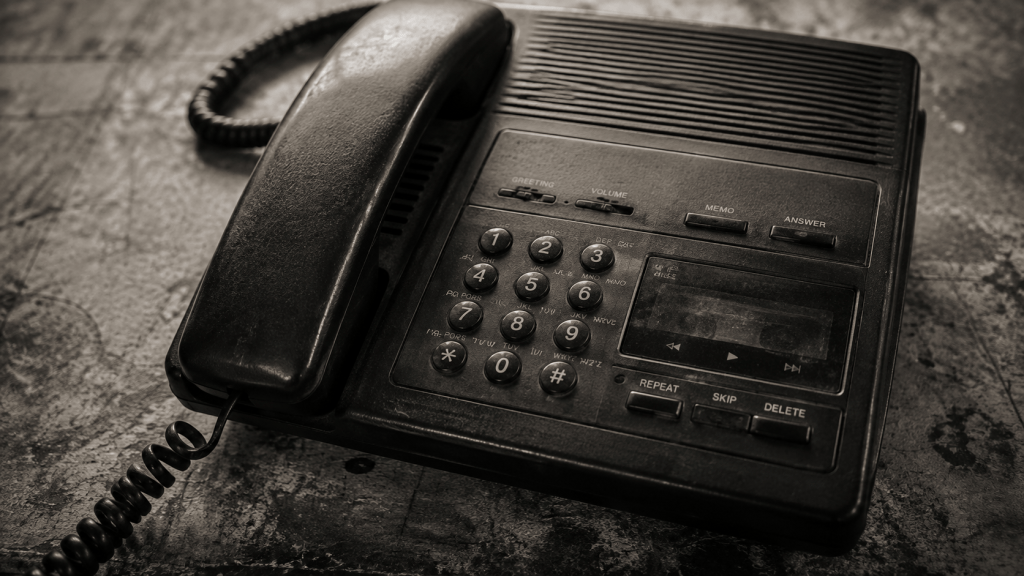
The strange path from a Brooklyn answering machine to “The Maestro,” “In Dust We Trust,” and the Chemical Brothers’ lifelong fascination with Beastie Boys.
There is a great piece of Beastie Boys history buried inside the Chemical Brothers’ 1995 debut album, Exit Planet Dust. It is the furious voice of a stranger who called a telephone number advertised on Paul’s Boutique. He reached an answering machine in Adam Yauch’s parents’ basement, and left a message declaring that he was interested only in the B-Boys.
Years later, the Chemical Brothers pulled that voice into “In Dust We Trust,” transforming what had once been a private telephone message into part of a pulverizing electronic dance track.
By then, however, the message had already lived one unlikely second life. The Beastie Boys had used it to open “The Maestro” on Check Your Head.
That means the voice traveled an extraordinary route: from a Brooklyn clothing-store telephone number, to an answering machine in the Yauch family basement, to a Beastie Boys album, and finally into the machinery of one of the defining electronic records of the mid-1990s.
And the story begins with an eleven-second track called “Ask for Janice.”
It Started with Paul’s Boutique
Near the end of Paul’s Boutique is “Ask for Janice,” a brief recording of a radio advertisement for a Brooklyn clothing store called Paul’s Boutique. The commercial ends by inviting listeners to call the store at (718) 498-1043.
Ad-Rock later explained that he had recorded the advertisement from Gil Bailey’s reggae radio program during the 1980s. He put it on one of the mixtapes the Beastie Boys were constantly making, and the group eventually became so enamored with the commercial that they used it on their album—and took the album’s title from the store itself.
But the story did not end when the advertisement became part of Paul’s Boutique.
After the actual Paul’s Boutique store closed, Adam Yauch obtained its old telephone number and arranged for calls to be transferred to an answering machine in the basement of his parents’ Brooklyn home. According to Ad-Rock, callers heard an outgoing message presenting the number as though it still belonged to a man named Paul, who was temporarily unavailable.
Suddenly, an obscure telephone number buried inside a Beastie Boys record became something more than a joke. Listeners could call it.
In an era before websites, social media, hidden online Easter eggs or interactive album campaigns, the Beastie Boys had accidentally created an analog extension of Paul’s Boutique. You could hear the number on the record, pick up a telephone, dial it and enter a strange little fictional world connected to the album.
The answering machine began collecting messages from fans, confused callers, pranksters and assorted weirdos.
One of them was a man named Allen.
“I’m Just Interested in the B-Boys”
Allen was not interested in Paul. His message makes that perfectly clear. After addressing “Paul” and insulting him, Allen announces what he actually wants:
“I’m just interested in the B-Boys.”
He then signs off with another insult.
The recording is distorted, abrasive and unmistakably real. Allen does not sound like somebody performing a comedy bit. He sounds like a person who genuinely believes he has called somebody named Paul and is irritated that Paul stands between him and the Beastie Boys. That sincerity is what makes the recording so funny.
The Beastie Boys preserved the message and eventually placed it at the beginning of “The Maestro” on Check Your Head. The placement is almost too perfect. Allen demands the B-Boys. Then the B-Boys arrive.
The voicemail effectively becomes an accidental introduction to the song, with an unknown caller functioning as a kind of deranged master of ceremonies. There is also something deeply characteristic about the Beastie Boys’ decision to use it at all.
The group repeatedly treated the sounds surrounding their music as potential components of the music itself. Studio chatter, mistakes, radio broadcasts, telephone messages, strange noises, spoken fragments, car alarms, and accidental performances could all be incorporated into a record.
The roughness did not necessarily need to be removed. Sometimes the roughness was the point.
Allen’s answering-machine message is a perfect example. It had poor fidelity. It was not recorded professionally. It was not intended for public consumption. It contained no melody, conventional rhythm or musical performance.
And yet the Beastie Boys heard something in it worth preserving.
Three years later, the Chemical Brothers heard something in it too.
From “The Maestro” to “In Dust We Trust”
The Chemical Brothers released Exit Planet Dust in 1995. “In Dust We Trust,” one of the album’s early tracks, contains vocal material taken from “The Maestro,” including the answering-machine recording. The sample is short; the Chemical Brothers surgically present a part of Allen’s phone message in which he says, “B-Boys.”
Included on “Exit Planet Dust,” the context changes completely. On Check Your Head, Allen’s message retains the basic outline of its original meaning. He is a caller demanding access to the Beastie Boys, and his demand introduces a Beastie Boys song.
On “In Dust We Trust,” the Chemical Brothers largely sever the voice from that story. Allen becomes sound. His voice arrives as an eruption of human aggression inside a track dominated by pounding drums, loops, distortion and electronic machinery.
The degraded quality of the telephone recording becomes an advantage. The voice is thin, overloaded and distant, but those limitations give it character. It cuts through the dense production precisely because it does not sound like a conventional studio vocal.
Allen is not really singing. He is not rapping. He is barely even speaking in the normal sense of a recorded musical performance. He is a rhythmic event–the response to the call-in-response part of the song.
That transformation gets at something essential about sampling. A sample does not have to preserve the original meaning of a recording. Sometimes it preserves its energy.
Allen originally left a message because he wanted to contact the Beastie Boys. By the time his voice appeared on a Chemical Brothers record, most listeners had no idea who Paul was, why Allen was angry, what telephone number he had called or why the Beastie Boys were involved. None of that was necessary anymore.
What survived was urgency, attitude, distortion, and personality. The Chemical Brothers had taken a piece of human behavior and turned it into texture.
More Beastie Boys DNA Inside “In Dust We Trust”
The voicemail is the most colorful Beastie Boys connection inside “In Dust We Trust,” but it is not necessarily the only one. Sample-identification sources have also identified material from “Gratitude” as part of the track, along with fragments associated with DJ Shadow’s “Entropy” and Fun Fun’s “Happy Station (Scratch Re-Mix).”
Sample databases should not automatically be treated as definitive session documentation. Their identifications are often collaborative rather than official, and individual claims should be treated with appropriate caution.
But the larger picture fits perfectly with the Chemical Brothers’ production philosophy.
Their records were built from collision. Hip-hop breakbeats could sit beside psychedelic noise. Acid-house electronics could collide with rock distortion. A tiny vocal fragment could become as important as a synthesizer. Old records could be dismantled and reassembled into something that belonged entirely to a different musical world.
That philosophy naturally overlapped with what the Beastie Boys had been doing. And Check Your Head offered an enormous amount of raw material for producers willing to listen closely: distorted instruments, loops, fragments of speech, odd noises, live playing, hip-hop drums, dub textures and pieces of recorded life that seemed to drift in and out of the album.
“In Dust We Trust” did not simply imitate that aesthetic. It absorbed part of it.
Then There Is the Dust Brothers Connection
The story becomes even more circular when the Chemical Brothers’ original name enters the picture. Before they became the Chemical Brothers, Tom Rowlands and Ed Simons performed as the Dust Brothers. The name was a tribute to the American production team responsible for producing Paul’s Boutique. That alone creates a direct line between the two groups.
The original Dust Brothers—John King and Mike Simpson—helped build one of the most densely sampled albums ever released by a major rock or hip-hop act. Their work on Paul’s Boutique represented sampling not merely as decoration but as composition: dozens of fragments reorganized into completely new musical structures.
Rowlands and Simons admired that approach enough to name themselves after them. Eventually, representatives of the original Dust Brothers objected to the British duo using the name, and Rowlands and Simons became the Chemical Brothers instead. Their new name grew out of one of their own tracks, “Chemical Beats.”
Their debut album title, Exit Planet Dust, reads like a farewell to that earlier identity. And then there is “In Dust We Trust.” The title preserves the old name even after the group had abandoned it. Which makes the Beastie Boys sample inside the track wonderfully recursive.
The American Dust Brothers produced Paul’s Boutique. A British electronic duo named themselves the Dust Brothers in tribute to those producers. The British Dust Brothers became the Chemical Brothers. The Chemical Brothers released Exit Planet Dust, an album announcing their departure from the Dust Brothers identity. On that album appeared a track called “In Dust We Trust.” And inside that track was a Beastie Boys answering-machine recording whose entire existence could ultimately be traced back to a telephone number placed on Paul’s Boutique.
The album produced by the original Dust Brothers had generated the telephone message later sampled by the musicians who had named themselves after the original Dust Brothers. Sample culture had folded back on itself.
A Sample of a Sample
There is another reason Allen’s voicemail is particularly interesting. When he originally left the message, it was not a musical recording at all. It was simply a telephone message.
The Beastie Boys were the first people in the chain to transform it into something resembling a sample. They removed it from the answering machine, placed it inside a musical sequence and gave it a new function. Allen was no longer simply a stranger leaving a message. His voice became part of “The Maestro.”
Then the Chemical Brothers sampled that repurposed recording. In effect, they sampled the Beastie Boys’ act of sampling everyday life.
Allen’s voice therefore passed through several distinct realities. He believed he was leaving a message for Paul. The Beastie Boys turned that message into the opening of “The Maestro.”The Chemical Brothers extracted it from “The Maestro” and placed it inside “In Dust We Trust.”
Listeners then encountered it as part of a British electronic dance record. At every stage, the voice moved farther away from the circumstances that originally created it. Yet at every stage it also became more permanent.
An answering-machine message is normally one of the most disposable forms of recorded sound imaginable. Someone listens to it, perhaps saves it briefly, and eventually erases it.
Allen’s message survived because musicians repeatedly recognized that its imperfection contained something valuable.
Who Was Allen?
The responsible answer is that very little is known about him. The Beastie Boys identified the caller as Allen, and Ad-Rock later devoted a section of Beastie Boys Book to the answering-machine story under the title “Yo, Paul, This Is Allen.” Beyond that, the record becomes less reliable.
A 1996 discussion in the alt.music.beastie-boys Usenet group claimed that the caller was “Allen Silvey from Maysville” and that he had left the message on the Paul’s Boutique hotline. But the claim appears without supporting documentation. It is best treated as early Beastie Boys fan lore rather than established biography.
There also does not appear to be a reliable public account from Tom Rowlands or Ed Simons explaining exactly how they discovered Allen’s recording, why they selected it or what arrangements were made concerning the sample. Without documentation, anything more specific about those circumstances would be speculation.
And perhaps the mystery improves the story. Allen does not really need a biography. His voice is enough.
The Message That Refused to Disappear
Allen presumably expected his message to be heard once. Maybe Paul would hear it. Maybe the Beastie Boys would hear it. Maybe nobody would.
Instead, it became part of two significant albums. On Check Your Head, the message represents the Beastie Boys’ affection for unpolished reality—the conversations, mistakes, fragments and accidental comedy existing around the music. On Exit Planet Dust, the same voice demonstrates the Chemical Brothers’ ability to recognize rhythmic potential inside almost any recorded sound.
The connection between the groups makes sense. The Beastie Boys moved freely among punk, hip-hop, funk, dub and live instrumentation. The Chemical Brothers built electronic music from hip-hop breaks, psychedelic effects, distorted rock energy and club repetition. Neither group was especially interested in respecting the borders between genres. Neither group believed that the definition of “music” had to stop at conventional instruments. And both understood one of the central ideas of sample culture:
A sound does not have to remain what it originally was. A radio commercial can become an album title. A telephone number can become an interactive joke. An answering-machine message can become the opening of a song. And that song can become raw material for another record made thousands of miles away.
Allen called looking for the B-Boys. The Beastie Boys answered him. Then the Chemical Brothers made sure the message was not erased.

