Tag: Archive Story

  • “Yo Paul, This Is Allen”: How a Beastie Boys Voicemail Reached “Exit Planet Dust”

    “Yo Paul, This Is Allen”: How a Beastie Boys Voicemail Reached “Exit Planet Dust”

    The strange path from a Brooklyn answering machine to “The Maestro,” “In Dust We Trust,” and the Chemical Brothers’ lifelong fascination with Beastie Boys.

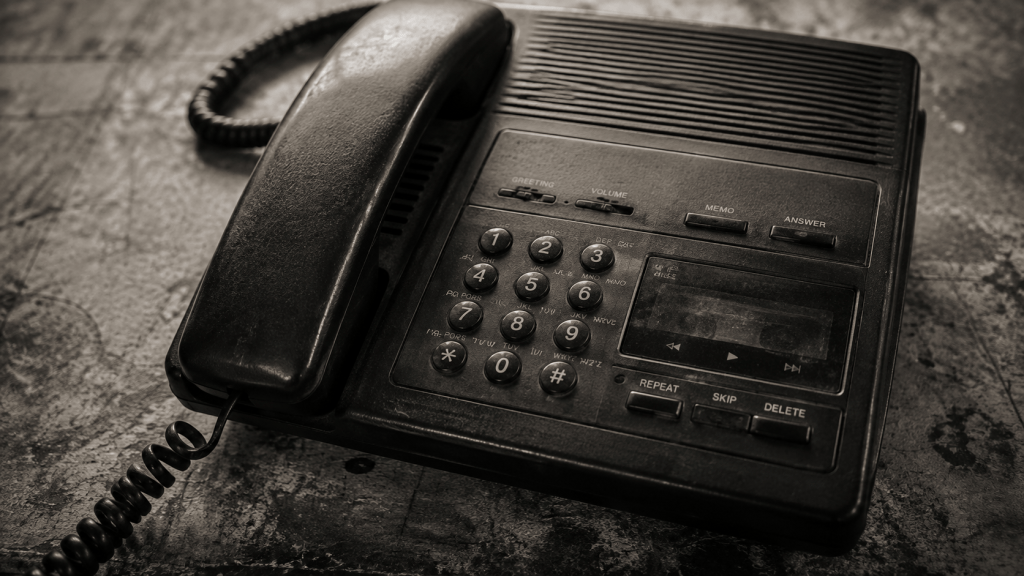
    There is a great piece of Beastie Boys history buried inside the Chemical Brothers’ 1995 debut album, Exit Planet Dust. It is the furious voice of a stranger who called a telephone number advertised on Paul’s Boutique. He reached an answering machine in Adam Yauch’s parents’ basement, and left a message declaring that he was interested only in the B-Boys.

    Years later, the Chemical Brothers pulled that voice into “In Dust We Trust,” transforming what had once been a private telephone message into part of a pulverizing electronic dance track.

    By then, however, the message had already lived one unlikely second life. The Beastie Boys had used it to open “The Maestro” on Check Your Head.

    That means the voice traveled an extraordinary route: from a Brooklyn clothing-store telephone number, to an answering machine in the Yauch family basement, to a Beastie Boys album, and finally into the machinery of one of the defining electronic records of the mid-1990s.

    And the story begins with an eleven-second track called “Ask for Janice.”

    It Started with Paul’s Boutique

    Near the end of Paul’s Boutique is “Ask for Janice,” a brief recording of a radio advertisement for a Brooklyn clothing store called Paul’s Boutique. The commercial ends by inviting listeners to call the store at (718) 498-1043.

    Ad-Rock later explained that he had recorded the advertisement from Gil Bailey’s reggae radio program during the 1980s. He put it on one of the mixtapes the Beastie Boys were constantly making, and the group eventually became so enamored with the commercial that they used it on their album—and took the album’s title from the store itself.

    But the story did not end when the advertisement became part of Paul’s Boutique.

    After the actual Paul’s Boutique store closed, Adam Yauch obtained its old telephone number and arranged for calls to be transferred to an answering machine in the basement of his parents’ Brooklyn home. According to Ad-Rock, callers heard an outgoing message presenting the number as though it still belonged to a man named Paul, who was temporarily unavailable.

    Suddenly, an obscure telephone number buried inside a Beastie Boys record became something more than a joke. Listeners could call it.

    In an era before websites, social media, hidden online Easter eggs or interactive album campaigns, the Beastie Boys had accidentally created an analog extension of Paul’s Boutique. You could hear the number on the record, pick up a telephone, dial it and enter a strange little fictional world connected to the album.

    The answering machine began collecting messages from fans, confused callers, pranksters and assorted weirdos.

    One of them was a man named Allen.

    “I’m Just Interested in the B-Boys”

    Allen was not interested in Paul. His message makes that perfectly clear. After addressing “Paul” and insulting him, Allen announces what he actually wants:

    “I’m just interested in the B-Boys.”

    He then signs off with another insult.

    The recording is distorted, abrasive and unmistakably real. Allen does not sound like somebody performing a comedy bit. He sounds like a person who genuinely believes he has called somebody named Paul and is irritated that Paul stands between him and the Beastie Boys. That sincerity is what makes the recording so funny.

    The Beastie Boys preserved the message and eventually placed it at the beginning of “The Maestro” on Check Your Head. The placement is almost too perfect. Allen demands the B-Boys. Then the B-Boys arrive.

    The voicemail effectively becomes an accidental introduction to the song, with an unknown caller functioning as a kind of deranged master of ceremonies. There is also something deeply characteristic about the Beastie Boys’ decision to use it at all.

    The group repeatedly treated the sounds surrounding their music as potential components of the music itself. Studio chatter, mistakes, radio broadcasts, telephone messages, strange noises, spoken fragments, car alarms, and accidental performances could all be incorporated into a record.

    The roughness did not necessarily need to be removed. Sometimes the roughness was the point.

    Allen’s answering-machine message is a perfect example. It had poor fidelity. It was not recorded professionally. It was not intended for public consumption. It contained no melody, conventional rhythm or musical performance.

    And yet the Beastie Boys heard something in it worth preserving.

    Three years later, the Chemical Brothers heard something in it too.

    From “The Maestro” to “In Dust We Trust”

    The Chemical Brothers released Exit Planet Dust in 1995. “In Dust We Trust,” one of the album’s early tracks, contains vocal material taken from “The Maestro,” including the answering-machine recording. The sample is short; the Chemical Brothers surgically present a part of Allen’s phone message in which he says, “B-Boys.”

    Included on “Exit Planet Dust,” the context changes completely. On Check Your Head, Allen’s message retains the basic outline of its original meaning. He is a caller demanding access to the Beastie Boys, and his demand introduces a Beastie Boys song.

    On “In Dust We Trust,” the Chemical Brothers largely sever the voice from that story. Allen becomes sound. His voice arrives as an eruption of human aggression inside a track dominated by pounding drums, loops, distortion and electronic machinery.

    The degraded quality of the telephone recording becomes an advantage. The voice is thin, overloaded and distant, but those limitations give it character. It cuts through the dense production precisely because it does not sound like a conventional studio vocal.

    Allen is not really singing. He is not rapping. He is barely even speaking in the normal sense of a recorded musical performance. He is a rhythmic event–the response to the call-in-response part of the song.

    That transformation gets at something essential about sampling. A sample does not have to preserve the original meaning of a recording. Sometimes it preserves its energy.

    Allen originally left a message because he wanted to contact the Beastie Boys. By the time his voice appeared on a Chemical Brothers record, most listeners had no idea who Paul was, why Allen was angry, what telephone number he had called or why the Beastie Boys were involved. None of that was necessary anymore.

    What survived was urgency, attitude, distortion, and personality. The Chemical Brothers had taken a piece of human behavior and turned it into texture.

    More Beastie Boys DNA Inside “In Dust We Trust”

    The voicemail is the most colorful Beastie Boys connection inside “In Dust We Trust,” but it is not necessarily the only one. Sample-identification sources have also identified material from “Gratitude” as part of the track, along with fragments associated with DJ Shadow’s “Entropy” and Fun Fun’s “Happy Station (Scratch Re-Mix).”

    Sample databases should not automatically be treated as definitive session documentation. Their identifications are often collaborative rather than official, and individual claims should be treated with appropriate caution.

    But the larger picture fits perfectly with the Chemical Brothers’ production philosophy.

    Their records were built from collision. Hip-hop breakbeats could sit beside psychedelic noise. Acid-house electronics could collide with rock distortion. A tiny vocal fragment could become as important as a synthesizer. Old records could be dismantled and reassembled into something that belonged entirely to a different musical world.

    That philosophy naturally overlapped with what the Beastie Boys had been doing. And Check Your Head offered an enormous amount of raw material for producers willing to listen closely: distorted instruments, loops, fragments of speech, odd noises, live playing, hip-hop drums, dub textures and pieces of recorded life that seemed to drift in and out of the album.

    “In Dust We Trust” did not simply imitate that aesthetic. It absorbed part of it.

    Then There Is the Dust Brothers Connection

    The story becomes even more circular when the Chemical Brothers’ original name enters the picture. Before they became the Chemical Brothers, Tom Rowlands and Ed Simons performed as the Dust Brothers. The name was a tribute to the American production team responsible for producing Paul’s Boutique. That alone creates a direct line between the two groups.

    The original Dust Brothers—John King and Mike Simpson—helped build one of the most densely sampled albums ever released by a major rock or hip-hop act. Their work on Paul’s Boutique represented sampling not merely as decoration but as composition: dozens of fragments reorganized into completely new musical structures.

    Rowlands and Simons admired that approach enough to name themselves after them. Eventually, representatives of the original Dust Brothers objected to the British duo using the name, and Rowlands and Simons became the Chemical Brothers instead. Their new name grew out of one of their own tracks, “Chemical Beats.”

    Their debut album title, Exit Planet Dust, reads like a farewell to that earlier identity. And then there is “In Dust We Trust.” The title preserves the old name even after the group had abandoned it. Which makes the Beastie Boys sample inside the track wonderfully recursive.

    The American Dust Brothers produced Paul’s Boutique. A British electronic duo named themselves the Dust Brothers in tribute to those producers. The British Dust Brothers became the Chemical Brothers. The Chemical Brothers released Exit Planet Dust, an album announcing their departure from the Dust Brothers identity. On that album appeared a track called “In Dust We Trust.” And inside that track was a Beastie Boys answering-machine recording whose entire existence could ultimately be traced back to a telephone number placed on Paul’s Boutique.

    The album produced by the original Dust Brothers had generated the telephone message later sampled by the musicians who had named themselves after the original Dust Brothers. Sample culture had folded back on itself.

    A Sample of a Sample

    There is another reason Allen’s voicemail is particularly interesting. When he originally left the message, it was not a musical recording at all. It was simply a telephone message.

    The Beastie Boys were the first people in the chain to transform it into something resembling a sample. They removed it from the answering machine, placed it inside a musical sequence and gave it a new function. Allen was no longer simply a stranger leaving a message. His voice became part of “The Maestro.”

    Then the Chemical Brothers sampled that repurposed recording. In effect, they sampled the Beastie Boys’ act of sampling everyday life.

    Allen’s voice therefore passed through several distinct realities. He believed he was leaving a message for Paul. The Beastie Boys turned that message into the opening of “The Maestro.”The Chemical Brothers extracted it from “The Maestro” and placed it inside “In Dust We Trust.”

    Listeners then encountered it as part of a British electronic dance record. At every stage, the voice moved farther away from the circumstances that originally created it. Yet at every stage it also became more permanent.

    An answering-machine message is normally one of the most disposable forms of recorded sound imaginable. Someone listens to it, perhaps saves it briefly, and eventually erases it.

    Allen’s message survived because musicians repeatedly recognized that its imperfection contained something valuable.

    Who Was Allen?

    The responsible answer is that very little is known about him. The Beastie Boys identified the caller as Allen, and Ad-Rock later devoted a section of Beastie Boys Book to the answering-machine story under the title “Yo, Paul, This Is Allen.” Beyond that, the record becomes less reliable.

    A 1996 discussion in the alt.music.beastie-boys Usenet group claimed that the caller was “Allen Silvey from Maysville” and that he had left the message on the Paul’s Boutique hotline. But the claim appears without supporting documentation. It is best treated as early Beastie Boys fan lore rather than established biography.

    There also does not appear to be a reliable public account from Tom Rowlands or Ed Simons explaining exactly how they discovered Allen’s recording, why they selected it or what arrangements were made concerning the sample. Without documentation, anything more specific about those circumstances would be speculation.

    And perhaps the mystery improves the story. Allen does not really need a biography. His voice is enough.

    The Message That Refused to Disappear

    Allen presumably expected his message to be heard once. Maybe Paul would hear it. Maybe the Beastie Boys would hear it. Maybe nobody would.

    Instead, it became part of two significant albums. On Check Your Head, the message represents the Beastie Boys’ affection for unpolished reality—the conversations, mistakes, fragments and accidental comedy existing around the music. On Exit Planet Dust, the same voice demonstrates the Chemical Brothers’ ability to recognize rhythmic potential inside almost any recorded sound.

    The connection between the groups makes sense. The Beastie Boys moved freely among punk, hip-hop, funk, dub and live instrumentation. The Chemical Brothers built electronic music from hip-hop breaks, psychedelic effects, distorted rock energy and club repetition. Neither group was especially interested in respecting the borders between genres. Neither group believed that the definition of “music” had to stop at conventional instruments. And both understood one of the central ideas of sample culture:

    A sound does not have to remain what it originally was. A radio commercial can become an album title. A telephone number can become an interactive joke. An answering-machine message can become the opening of a song. And that song can become raw material for another record made thousands of miles away.

    Allen called looking for the B-Boys. The Beastie Boys answered him. Then the Chemical Brothers made sure the message was not erased.
  • Candy, Crates, and Collector Lore: How Biz Markie Became the Beastie Boys’ Most Unbelievable Friend

    Candy, Crates, and Collector Lore: How Biz Markie Became the Beastie Boys’ Most Unbelievable Friend

    The familiar story begins with Biz Markie walking into G-Son Studios late at night and asking the Beastie Boys where he could buy candy. But Biz later suggested that he had met the group before that legendary visit. Untangling the competing versions reveals something larger: a friendship built on records, jokes, spontaneous performances, and Biz’s almost supernatural ability to turn collecting into mythology.

    There is a perfect Biz Markie story about the first time he met the Beastie Boys.

    It is late at night in Los Angeles. Biz arrives at the Beasties’ G-Son studio in Atwater Village, then a largely deserted commercial area. Almost everything nearby is closed except for a liquor store across the street. Biz’s first concern is not the recording equipment, the instruments, the basketball hoop, or the three famous musicians waiting inside.

    He wants to know where the candy store is.

    The Beastie Boys are confused. They briefly wonder whether “candy” is code for heroin or some other drug. It is around eleven o’clock at night, after all, and this visitor has arrived urgently requesting directions to a candy store. But there is no code. Biz simply wants candy. He goes to the liquor store, returns with a bag full of it, and proceeds to behave exactly as Biz Markie was expected to behave—except, as Ad-Rock later admitted, the Beasties had not anticipated that the real Biz would be quite so thoroughly Biz-like.

    It is a wonderful story. It captures Biz’s appetite, innocence, eccentricity, and complete indifference to how a successful rapper was supposed to conduct himself. It also became the accepted account of how Biz Markie and the Beastie Boys met.

    But it may not have been their literal first encounter.

    Biz’s own version suggests that the relationship had a less cinematic prehistory. He remembered meeting the Beasties a little earlier, before they actually began spending time together. The surviving transcript of his 2017 Questlove Supremeinterview is machine-generated and badly garbles the name of the person who may have brought him to a studio, making it impossible to identify the intermediary confidently. Biz nevertheless made one distinction clear: he believed he had met them previously, but they “wasn’t hanging” yet.

    That distinction—between encountering someone and truly meeting them—may be the key to the entire mystery.

    The first encounter and the first real meeting

    The evidence supports two different events.

    First, Biz apparently had some kind of earlier contact with the Beastie Boys. He did not describe it as the beginning of the friendship, and the available transcript does not reliably establish where it occurred, who arranged it, or which Beastie was present.

    Second, Biz came to the Beasties’ studio during the Check Your Head era and became part of the G-Son universe. This is the meeting everyone remembered because it was the moment the relationship came alive.

    G-Son was ideally suited to Biz. The Beastie Boys had established the studio around 1990 in a former dancehall in Atwater Village. It was not merely a recording facility. The large room contained instruments, a basketball hoop, a skate ramp, and enough open space to function as a clubhouse. Artists could record, play ball, search through records, eat, argue, joke, or spend hours following an idea that might never become a proper song.

    That environment matched Biz’s creative method. He did not always arrive with a written song or a formal plan. He arrived with records, fragments, memories, voices, sound effects, routines, and sudden demands that the musicians accompany whatever song had entered his head.

    Ad-Rock remembered that Biz wanted to sing peculiar songs from the 1970s. He might ask whether the Beasties knew the Beatles’ “Yesterday,” then immediately begin singing before anyone had worked out the chords. According to Ad-Rock, the group accumulated a considerable amount of tape featuring Biz simply being Biz—improvising, singing, talking, and turning an ordinary studio visit into a performance.

    Mike D remembered the same ritual. Biz would appear at G-Son, make the ceremonial trip across the street for a brown paper bag of candy, consume his sugar, grab a microphone, and announce a song as though the Beasties should already know how to play it. Strangely, they often did. On another visit, Biz brought a stack of 45s to make a tape for his flight home. Rather than filling it with celebrated breakbeats, he happily sang along to Helen Reddy’s “I Am Woman.”

    The candy-store story, therefore, may not describe the first time Biz ever stood in the same room with a Beastie Boy. It describes something more important: the first time the Beasties experienced the full, uninhibited phenomenon of Biz Markie.

    Which Beastie Boy met Biz first?

    The honest answer is that no reliable published account identifies Mike D, MCA, or Ad-Rock as the first individual member to meet Biz Markie.

    Ad-Rock tells the celebrated first-studio-visit story, but he speaks collectively about what “we” thought and did. That does not prove that he personally made the introduction.

    Mike D supplied one of the most detailed accounts of the session that produced “The Biz vs. the Nuge.” In that version, the group stopped at Mike’s house and looked through records before continuing to G-Son. Biz examined sections containing Billy Joel, Paul Simon, and James Brown before pulling out Ted Nugent’s Cat Scratch Fever. That makes Mike a plausible early host or point of contact, but it still does not prove that he was the first Beastie Biz ever met.

    Biz himself consistently referred to meeting “the Beastie Boys” as a group. His recollection of the earlier encounter is too garbled to determine whether one member was singled out. When describing the relationship that followed, he again spoke collectively: the Beasties were his brothers; they exchanged—or, in his joking formulation, stole—records from one another; he stayed with them, recorded with them, toured with them, and brought them to his favorite sneaker stores.

    There are several theories, but none can presently be proven.

    Theory One: All three met Biz during the first G-Son visit

    This is the simplest reading of the Beasties’ collective account. Biz arrived at their studio, asked for candy, and encountered the group together.

    The weakness is Biz’s statement that he had met them a little earlier. The G-Son story may have been the first significant hang rather than the first introduction.

    Theory Two: Mike D was the initial personal contact

    Because Mike’s account places Biz at his house looking through records before they went to G-Son, it is possible that Mike was the first member to spend substantial one-on-one time with him.

    But the story may describe a later visit rather than the first. Biz eventually became a regular presence around the group, and memories of separate candy runs, record sessions, and improvised performances may have blended together.

    Theory Three: They crossed paths earlier through New York’s hip-hop network

    Biz and the Beastie Boys moved through overlapping New York circles during the 1980s. Fans have speculated that the connection could have come through LL Cool J, Def Jam, Rush Artist Management, or another shared figure in the city’s relatively compact hip-hop community. An online Beastie Boys discussion, for example, proposed LL Cool J as a possibility. No firsthand account located for this article confirms that theory.

    The theory is plausible in a general sense. Biz knew nearly everyone. He had performed and worked with artists connected to the Juice Crew, crossed paths with Def Jam artists, and had an extraordinary habit of locating people and inserting himself into their lives. But plausibility is not documentation.

    Theory Four: There was no single identifiable “first meeting”

    This may be the most likely explanation.

    Artists frequently crossed paths backstage, in studios, at clubs, on radio programs, and through mutual friends without recognizing the moment as historically important. Biz may have casually encountered one or more Beasties in New York and later reintroduced himself in Los Angeles. The candy-store night became the official origin story because it was memorable, funny, and unmistakably marked the beginning of the friendship.

    Until a clearer firsthand account surfaces, assigning the first handshake to Mike D, MCA, or Ad-Rock would be speculation.

    Basketball, Money Mark, and “Bennie and the Jets”

    Biz remembered the beginning of the real friendship as a combination of basketball and music.

    In his Questlove Supreme account, Biz described a game involving himself, the Beastie Boys, and what the imperfect transcript appears to identify as members of Boo-Yaa T.R.I.B.E. Biz, unsurprisingly, remembered himself fouling people. After the game, the gathering moved toward the piano and keyboards, with Money Mark helping turn the hang into a jam session.

    Money Mark began playing songs Biz remembered from childhood. Biz knew them all and sang along. He moved freely through rock and pop records that many rappers of the period might have regarded as corny, unfashionable, or outside the acceptable canon. Then Mark played the opening of Elton John’s “Bennie and the Jets.”

    Biz began singing.

    The Beasties asked him to do it again. Then again. What might have begun as a joke continued for hours and eventually became a recording. Biz’s gloriously unstable version was released as a flexi-disc with the second issue of Grand Royalmagazine and was later included on the Beastie Boys’ The Sounds of Science anthology.

    The performance explains why Biz fit so naturally into the Beasties’ world.

    Neither Biz nor the Beastie Boys treated the borders between “cool” and “uncool” music as permanent. Biz could recognize an obscure drum break, treasure a soft-rock single, imitate a commercial, sing Elton John, perform a Beatles song, and beatbox within the same evening. The Beasties, particularly during the transition from Paul’s Boutique to Check Your Head, were similarly dismantling boundaries between rap, punk, funk, lounge music, jazz, dub, and childhood pop culture.

    Biz did not need to adjust himself to their eclecticism. He was already living inside a musical universe in which every record, television theme, advertising jingle, toy, cereal box, sneaker, and half-remembered chorus remained available for reuse.

    “The Biz vs. the Nuge”

    The story behind “The Biz vs. the Nuge” is almost a miniature version of their entire friendship.

    According to Mike D’s account, Biz was going through records at Mike’s house when he found Ted Nugent’s Cat Scratch Fever. He asked to bring the album to G-Son because he had an idea for it. Once at the studio, Biz made the customary inquiry about candy. A supply was obtained from across the street. The Nugent record went onto the turntable, and Biz completed his contribution in two takes.

    The resulting piece lasts only about half a minute. Biz sings and vocalizes over the opening of Nugent’s “Home Bound,” transforming a ponderous 1970s guitar riff into a strange ceremonial announcement for the Beastie Boys. “The Biz vs. the Nuge” appeared on Check Your Head, released in 1992, with Biz credited as a guest performer.

    Biz remembered developing the idea independently, calling the Beasties, playing the Nugent record over the telephone, and telling them he had something for them. However the exact chronology is reconstructed, the essential method remains the same: Biz heard a forgotten or unfashionable piece of popular culture, imagined himself inside it, and delivered the idea to his friends with total conviction.

    That conviction was contagious. The Beasties did not need Biz to provide a polished composition. They understood that his spontaneous reaction was the composition.

    From collaborator to brother

    Biz’s relationship with the Beastie Boys continued well beyond Check Your Head.

    He appeared on “Do It” from 1994’s Ill Communication and contributed to the Beasties’ broader 1990s recording world, including appearances associated with Hello Nasty. His “Bennie and the Jets” performance became a recurring favorite, and the group sometimes brought him onstage to sing it.

    The influence also extended beyond individual songs. Mike D explained in a 1992 interview that Biz had a phrase he used when playing an especially good record: “Grand Royal, guaranteed!” The Beastie Boys adopted Grand Royal as the name of their label and magazine, meaning Biz’s private record-appraisal language became part of the institutional identity of the Beasties’ next era.

    Biz described the relationship as a brotherhood. He believed he supported the Beasties during a period when parts of the hip-hop industry had become indifferent or hostile toward them after their split from Def Jam. In return, he said, they helped him understand business and the importance of saving money. Biz took the Beasties sneaker shopping; they introduced him to other things. Records moved back and forth, although perhaps not always with the original owner’s full consent.

    Ad-Rock jokingly remembered that Biz kept a rare Funkadelic record and never returned it. An old friend was also reportedly still waiting to be paid for a boxed Rock ’Em Sock ’Em Robots set that Biz acquired. Ad-Rock initially called the record incident theft, then corrected himself: Biz had not exactly stolen it. He had simply kept it.

    That correction describes the Biz Markie theory of ownership remarkably well.

    Biz Markie, owner of everything

    Biz was not merely a collector. He was a collector who made collecting sound like an occult power.

    He claimed to possess records other collectors had never seen, machines that had never officially reached the market, toys in impossible quantities, vintage clothing, old videos, sneakers, dolls, board games, model cars, and artifacts connected to hip-hop history. His collections reportedly spilled into storage spaces and additional houses. Questlove credited—or blamed—Biz for inspiring his own enormous accumulation of records and popular-culture objects.

    Some of Biz’s collection was undeniably real. Photographs, interviews, friends, and documentary footage confirm that he amassed records, sneakers, toys, dolls, vintage electronics, clothing, cars, and memorabilia. Director Sacha Jenkins described him as a lifelong “big kid” who collected random toys, Barbie dolls, and sneakers long before such collecting became a mainstream adult industry.

    But Biz rarely stopped at saying he owned many examples of something. He tended to make the claim absolute.

    He told The Washington Post that he had “every Barbie that ever came out.” He proceeded to display or name items including a Six Million Dollar Man figure, a Paralympic Barbie, Welcome Back, Kotter dolls, the Fonz, and figures from The Munsters. He explained the emotional origin of the collection simply: when he had wanted those things as a child, he could not get them. As an adult with money, he could.

    The claim to own every Barbie is probably better understood as Biz language than as an audited inventory. It conveyed scale, obsession, and authority. Biz did not have a Barbie collection. In his telling, he had completed Barbie.

    The same pattern applied to records.

    The bell-less “Mardi Gras”

    The most famous example of Biz’s collector mythology concerned Bob James’s “Take Me to the Mardi Gras,” the 1975 recording whose opening percussion became one of hip-hop’s foundational breaks.

    Biz claimed to own a version without the familiar bells—essentially the drums and shakers stripped of the element most listeners associated with the recording. He said he had possessed it since the 1990s and described it as something like an acetate or discarded test version.

    Questlove and other elite collectors searched for it. They could not find another copy. The pursuit became an expensive obsession. Questlove joked that Biz’s claim had sent collectors into a financial tailspin: while searching for the impossible record, they bought countless other records along the way.

    Bob James disputed the story. He said there would have been no reason to make a version without the bell part and rejected the idea that Biz had somehow obtained an alternate master.

    Biz remained unmoved. He argued that mistakes, acetates, abandoned masters, and unusual pressings existed. His defense culminated in a perfectly Biz-like statement: “I have no reason to lie about one record.”

    Of course, the humor lies in the phrase one record. Biz had built an entire persona around possessing records that no one else could locate. During the same conversation, Questlove estimated that he owned approximately fourteen true one-of-one records. Biz replied that he had perhaps two or three thousand records he had never seen anyone else possess.

    The bell-less “Mardi Gras” has never been publicly authenticated. But complete verification may be beside the point. The story transformed the record into hip-hop’s equivalent of buried treasure. Biz’s ownership claim made the object culturally valuable even if no one else could hear it.

    He did not merely collect rarity. He created it through storytelling.

    The Technics turntables no one else could get

    Biz told a similar story about a pair of miniature Technics turntables designed to play 45s.

    According to Biz, Technics had developed the machines during the 1980s but abandoned them when compact discs began taking over the market. Years later, while visiting Japan in connection with Yo Gabba Gabba!, Biz said he was brought into a factory, saw the forgotten turntables sitting in a corner, and arranged a series of trades to obtain them.

    Unlike the bell-less “Mardi Gras,” the turntables appear to have physically existed; people had seen Biz use or display them. The uncertainty concerns the surrounding origin story: Were they truly unreleased prototypes? Was Biz the only private owner? How exactly did a children’s television appearance lead him into a Japanese factory where the machines happened to be waiting?

    With Biz, a genuine artifact could acquire a layer of folklore almost immediately.

    When asked what he would rescue if his collection caught fire, Biz selected both of the turntables—one with a curved tonearm and one with a straight arm—along with a beatbox machine he said Grandmaster Flash had given him.

    The answer reveals that Biz did not value objects only for their market price. He valued provenance, exclusivity, personal history, and the story he could tell while showing the object to someone else.

    Buying every copy so no one else could have it

    Biz’s collecting also reflected an older competitive tradition among hip-hop DJs.

    In the early years of hip-hop, knowledge of a break could be an advantage. DJs sometimes covered or removed record labels so rivals could not identify what they were playing. Owning an obscure record meant controlling a sound that other performers could not easily reproduce.

    Biz took that instinct to its logical extreme. He recalled sleeping outside a Brooklyn record store while searching for the drums used on “Nobody Beats the Biz.” When he found a particularly important record, he sometimes wanted to buy every available copy so no one else could obtain it.

    In that context, saying “I own that record” could mean several things:

    Biz physically possessed a copy.

    Biz knew the record before you did.

    Biz had used it publicly and therefore claimed cultural territory over it.

    Biz possessed a superior pressing or secret version.

    Biz knew where the remaining copies were hidden.

    Or Biz had told the story so convincingly that challenging him required more energy than accepting it.

    His outrageous claims were therefore related to hip-hop boasting, but the currency was different. Other performers bragged about cars, jewelry, money, or romantic conquests. Biz bragged about imported 45s, test pressings, board games, discontinued dolls, cereal, sneakers, prototype turntables, and television memorabilia.

    He turned expertise into spectacle.

    Was Biz exaggerating?

    Almost certainly, at least sometimes. But describing the phenomenon simply as lying misses what made it culturally meaningful.

    Biz’s friends challenged him affectionately because his knowledge was genuine. Questlove could doubt the bell-less Bob James record while still regarding Biz as a foundational collector and historian. Ad-Rock could accuse him of keeping a rare record while remembering every visit as an extraordinary creative event. Other artists remembered Biz identifying songs, breaks, television themes, toys, sneakers, and forgotten cultural fragments with astonishing speed.

    He had earned enough credibility to make the incredible seem temporarily possible.

    His claims also operated like performances. A Biz Markie story demanded participation. The listener either argued, began searching, produced a rival artifact, or surrendered to the possibility that Biz had once entered a factory in Japan and emerged with the only two turntables of their kind.

    Even skepticism extended the performance. Every attempt to disprove Biz created another conversation about Biz.

    His collecting also had an emotional foundation. Biz associated toys with things he had wanted but could not obtain when he was young. He did not preserve everything behind glass. When asked where his artifacts were kept, he said he played with them. He handled his model cars and AFX racing sets. The collections were not just investments or museum pieces. They allowed him to remain connected to the wonder, frustration, and desire of childhood.

    That quality helps explain why his collecting and his music felt like expressions of the same personality. “Just a Friend,” “Pickin’ Boogers,” his beatboxing routines, his Elton John performances, his toy collections, his candy runs, and his impossible records all rejected adult embarrassment.

    Biz liked what he liked at maximum volume.

    Why the Beasties understood him

    The Beastie Boys understood that Biz’s lack of inhibition was not a limitation. It was his creative gift.

    At G-Son, they were attempting to recover the spontaneity of being a band. They had moved away from the expensive, sample-dense construction of Paul’s Boutique and built a private space where they could play instruments, record experiments, invite friends, and leave the tape running.

    Biz was the human embodiment of leaving the tape running.

    He could enter with a Ted Nugent record, demand candy, sing Elton John for hours, make a Helen Reddy mixtape, take the Beasties sneaker shopping, keep one of their records indefinitely, and depart having generated material that no conventional songwriting session could have produced.

    The uncertainty surrounding their first meeting is therefore appropriate. There may never have been a formal introduction followed by a clear beginning. Biz seems to have entered the Beastie Boys’ world the way he entered so many people’s lives: first as a strange visitor, then as an unavoidable presence, and finally as family.

    Perhaps Mike D met him first. Perhaps Ad-Rock did. Perhaps all three encountered him together. Perhaps there was an earlier New York meeting that none of them considered important until Biz appeared at G-Son and asked for candy.

    What can be said with confidence is that once Biz began hanging around, the relationship became immediate and durable. He contributed songs, phrases, performances, records, clothing knowledge, and collector mythology to the Beasties’ expanding universe.

    And somewhere—at least according to Biz—there may still be a version of “Take Me to the Mardi Gras” without the bells, stored near every Barbie ever made, two prototype Technics turntables, Grandmaster Flash’s beatbox, a rare Funkadelic album that once belonged to Ad-Rock, and whatever else Biz decided was his.

    Grand Royal, guaranteed.

  • “Jimmy James” & “Rockin’ It” by Fearless Four: The Harlem Rap Classic that Turned Kraftwerk Human

    “Jimmy James” & “Rockin’ It” by Fearless Four: The Harlem Rap Classic that Turned Kraftwerk Human

    The Fearless Four’s “Rockin’ It” occupies a distinctive place in early hip-hop history. Released as a twelve-inch single on Bobby Robinson’s Enjoy Records in 1982, it joined the communal routines of first-generation rap crews to an electronic riff derived from Kraftwerk’s “The Man-Machine.” The result sounded simultaneously like a Harlem party and a transmission from the future: four young MCs trading boasts and dance instructions over a mechanical motif that session musician and arranger Errol “Pumpkin” Bedward had reshaped into something warmer, faster and more exuberant.

    The record was a local sensation, became permanently associated with the landmark graffiti documentary Style Wars, helped propel the Fearless Four toward a contract with Elektra/Asylum, and later supplied material for records by MC Lyte, De La Soul, Jay-Z, Camp Lo and artists far beyond New York. Its inclusion in the Smithsonian Anthology of Hip-Hop and Rap confirms that “Rockin’ It” is no longer merely an old-school favorite. It is part of the genre’s institutional history. 

    The record at a glance

    The best-supported date for the original American release is 1982, notwithstanding later reissues and occasional sources that date it to 1983. The original Enjoy Records twelve-inch is generally identified as catalog number ER-6028, with a 7:06 vocal version on one side and a 7:06 instrumental on the other. Bobby Robinson is credited as producer; the record’s accompaniment is attributed to Pumpkin and Friends. The listed writers are B. Robinson, D. Barksdale, M. Clee, P. Graham and T. Dones. Contemporary digital editions are sometimes shorter: the commonly streamed version runs approximately 6:29. 

    That discrepancy is worth noting because “Rockin’ It” was conceived for the twelve-inch format. The long instrumental passages, repeated riff and extended closing section made room for dancers, DJs and the physical experience of a large sound system. A shortened digital file conveys the song, but not quite the same event.

    The group heard on the record consisted of four MCs—DLB, the Devastating Tito, Mighty Mike C and the Great Peso—supported by DJs Master O.C. and Krazy Eddie. Thus, the Fearless Four was functionally a six-person organization: four voices at the front and two DJs behind them. 

    The Fearless Four and Harlem’s early rap culture

    The Fearless Four developed in and around Harlem’s Grant Houses and Manhattanville. The group’s roots predated the recording industry’s serious interest in rap. Tito and Master O.C. had performed together under earlier names, including the Houserockers Crew, before the lineup expanded and changed. Like many crews of the period, the Fearless Four grew through neighborhood affiliations, school performances, live routines, graffiti culture and competition with other MC organizations. 

    Tito recalled that he first encountered hip-hop through tapes of figures such as DJ Hollywood and Lovebug Starski, memorizing routines before developing his own. He later became associated with members of the Treacherous Three, Cold Crush Brothers and other early crews, describing those groups as competitors but also allies. That atmosphere matters to “Rockin’ It.” The song is not simply four disconnected verses laid over a beat. It is a recorded approximation of a practiced crew routine—the kind of coordinated performance that had been developed before rap records became standard products. 

    The Fearless Four reached Enjoy Records through persistence. Tito said that he and Mike C repeatedly visited Bobby Robinson’s office and warehouse on 125th Street until an employee named Poochie Costello persuaded Robinson to hear them. Robinson had already become one of early recorded rap’s essential independent businessmen through releases by Grandmaster Flash and the Furious Five, the Funky Four Plus One, the Treacherous Three and others. 

    “Rockin’ It” was therefore made inside a distinctly early-rap production system: a neighborhood crew, an independent Harlem label owner, a small group of versatile studio musicians and a twelve-inch record intended first for local radio, clubs and mobile DJs.

    How “The Man-Machine” became “Rockin’ It”

    The record’s central musical idea comes from Kraftwerk’s 1978 composition “The Man-Machine.” Sample databases often describe the connection as a sample, but replay or interpolation is more accurate in the historical and technical sense. Pumpkin did not merely lift a digital fragment and loop it in the modern manner. He listened to the Kraftwerk passage and recreated its basic shape with different instrumentation and feel. 

    Tito’s account is especially valuable. He said that Pumpkin constructed “Rockin’ It” under the supervision of Tito and Peso. The two MCs offered direction, while Pumpkin selected the sounds and transformed Kraftwerk’s colder electronic figure into a more piano-like riff. Tito remembered the pattern immediately striking the group as contagious and potentially successful. 

    That recollection complicates the official credits in a productive way. Bobby Robinson was the record’s credited producer, which reflected his role as label owner, organizer and commercial overseer. Pumpkin and Friends supplied the musical accompaniment, while the members participated in directing the track and writing the vocal performance. “Production” on an early independent rap record did not necessarily correspond to the modern image of a single beatmaker operating every machine. It could encompass financing, session supervision, arrangement, musical recreation and label control.

    Pumpkin’s ability to replay existing records was central to his reputation. His nephew later described him as a musician who could reproduce keyboard, bass and drum parts by ear, then alter them through new patterns and breakdowns. “Rockin’ It” exemplifies that skill: the source is recognizable, yet the new recording has a different temperament. Kraftwerk’s original suggests disciplined automation; Pumpkin’s version turns that machinery into a party device. 

    The record thus belongs to the early electronic turn in New York hip-hop, when DJs and producers were exploring Kraftwerk alongside funk, disco and break records. It appeared during the same broad period in which Afrika Bambaataa and the Soulsonic Force’s “Planet Rock” made the relationship between Bronx hip-hop and German electronic music unmistakable. But “Rockin’ It” has a less austere character. Its machine-like repetition is continually disrupted by laughter, voices, group chants and the personalities of the four MCs.

    The Poltergeist opening

    The song begins with a very short piece of dialogue from the 1982 film Poltergeist: “They’re here.” The line creates a momentary atmosphere of suspense before the crew announces itself. It also works as a joke—the mysterious arrival is not a supernatural invasion but the arrival of the Fearless Four. 

    Some biographies confusingly state that the song appeared on the Poltergeist soundtrack. That is almost certainly a mistaken description of the relationship. “Rockin’ It” uses dialogue from the film; it is not a song featured in Poltergeist.

    The opening also illustrates the exploratory nature of early hip-hop collage. A horror-film sound bite, a recreated German electronic motif and Harlem crew routines coexist without needing to belong to the same genre or cultural category. The record’s logic is associative: anything memorable can be redirected toward the party.

    The sound of the record

    Musically, “Rockin’ It” is built around contrast. The accompaniment is repetitive, rigid and synthetic, while the voices are sociable and animated. The main riff cycles insistently, supported by a comparatively flat snare, low-end pulse and percussion accents. During the breakdown, the central melodic figure recedes and the drums, metallic percussion and chimes become more exposed before the principal riff returns. 

    That repetition is not merely a lack of musical development. It is functional. The stable pattern gives dancers an uninterrupted floor and provides the MCs with a reliable platform for handoffs, group answers and variations in delivery. It also makes the record easy to mix with another record—a fundamental consideration when the principal users of a twelve-inch single included DJs.

    Tito recalled that some radio and mix-show DJs increased the record’s pitch. Frankie Crocker and WBLS generally played it at its intended speed, he said, while WKTU’s Carlos DeJesus and some mix DJs accelerated it to fit their sets. That helps explain why recollections of the song’s tempo and energy sometimes differ: audiences did not always hear the record at precisely the speed at which it was recorded. 

    A present-day listener accustomed to densely layered production may initially hear the arrangement as sparse or repetitive. On a large system, however, the economy becomes a strength. The riff occupies a clear frequency range, the drums leave space for the voices, and every return of the central figure reinforces recognition.

    Complex’s David Drake has praised the record as a production that has aged unusually well, emphasizing how the expanded frequencies of twelve-inch vinyl allowed the Kraftwerk-derived motif to function as a large dance-floor structure. Pitchfork later called it a canonical electro-rap favorite and used it as an example of how strange and electrifying pre-Run-DMC hip-hop could sound. 

    What the lyrics are about

    “Rockin’ It” is not a narrative song. It does not tell a detailed story, address political conditions or develop a single argument. Its subject is the performance itself: who the Fearless Four are, how well they rap, why the audience should dance and how the group works as both a collective and a set of individual personalities.

    The introduction operates as a roll call. Each MC’s name is announced and associated with a brief vocal signature. The recurring refrain then confirms that every member is participating. From there, the song moves between coordinated group passages, individual verses, dance instructions, audience invitations and call-and-response sections. 

    Several ideas recur:

    Collective identity. The members repeatedly emphasize the group rather than presenting the track as a sequence of unrelated solo appearances. Even when one MC has the foreground, the others remain audible as respondents or supporters.

    Self-branding. The repeated names and titles ensure that a listener encountering the record on the radio understands exactly who is performing. In a period before music videos, social media and extensive album packaging, the recording itself had to establish the group’s identity.

    Improvement and legitimacy. The MCs present themselves as performers who have developed since earlier appearances and who deserve the audience’s confidence.

    Dancing rather than confrontation. Most of the commands are invitations to move, shout and join the event. The competitive element is present in the group’s confidence, but the song is more hospitable than combative.

    Individual distinction within a routine. DLB, Tito, Mike C and Peso do not sound identical. The record gives each a moment while preserving the impression that the routine belongs to everyone.

    A 2016 close reading singled out Peso’s verse because he interrupts the more regular sentence patterns of the preceding MCs with a string of dance references and abrupt commands. That shift illustrates how a relatively simple lyric can gain energy through changes in cadence and function rather than complex storytelling. 

    The language in historical context

    The writing represents early-1980s party rap rather than the denser internal rhyming and autobiographical detail that would become more common later in the decade. Many lines employ direct end rhymes, crowd instructions and conventional boasts. Judged solely by the standards established after Rakim, Big Daddy Kane, Kool G Rap or Public Enemy, the verses may seem elementary. Judged as a recorded crew routine from 1982, their strengths are coordination, projection, timing and personality.

    One line also uses a racial slur while acknowledging Puerto Rican listeners. The usage reflects a period and community context but can sound jarring or offensive today. Rap Radar highlighted the line in a retrospective post, while Tito’s history as a Nuyorican MC makes the ethnic acknowledgment more complicated than a casual outside reference. It can be read as an attempt at neighborhood inclusion expressed through language many modern writers would avoid reproducing. 

    The song is otherwise largely celebratory. It contains little of the violence, sexual detail or social pessimism associated with some later rap. Its worldview is that a capable crew, a strong record and a receptive crowd are sufficient to transform a room.

    Radio success and what it did for the group

    The members remember “Rockin’ It” becoming popular almost immediately. In a 2024 interview, Mighty Mike C said Mr. Magic began playing it on WBLS and that its success seemed to happen overnight. DLB remembered performing it at a Long Island roller rink in connection with promotions by Hank Shocklee and Chuck D, where the crowd reaction convinced the group that the record had traveled beyond its immediate neighborhood. 

    A Rock the Bells history goes further, reporting that Frankie Crocker eventually had to retire the record from WBLS’s number-one position because it remained there so long. That story is frequently repeated in hip-hop histories, but I did not find surviving contemporaneous station charts that independently establish the exact duration or formal status of the ranking. It is safest to present it as oral history rather than documented national chart data. 

    I also found no evidence that “Rockin’ It” became a major Billboard pop or R&B chart record. Its importance was regional, cultural and long-term rather than dependent on a surviving national chart position.

    The record did not make the teenagers wealthy. In the 2024 interview, the surviving members agreed that its success did not materially transform their finances. It did, however, give them recognition, performances and leverage. In 1983, the Fearless Four became widely credited as the first rap group signed to a major label when Elektra/Asylum signed them; Kurtis Blow had earlier broken that barrier as a solo rapper. 

    Style Wars and the visual memory of the song

    For many listeners who were not in New York in 1982, “Rockin’ It” became familiar through Tony Silver and Henry Chalfant’s Style Wars. The 1983 documentary used the record alongside music by Grandmaster Flash and the Furious Five, the Treacherous Three, Trouble Funk, Rammellzee and K-Rob, and others. 

    That placement was crucial to the song’s afterlife. Style Wars became one of the definitive visual documents of early graffiti, breaking and New York hip-hop culture. As the documentary circulated on television, videotape, repertory screenings and later DVD, “Rockin’ It” acquired a visual setting: subway trains, writers, breakers and the city before hip-hop became a global commercial industry.

    The association is so strong that later listeners often remember the record less as an isolated Enjoy single than as part of the emotional soundscape of Style Wars. AllHipHop specifically credits the film with extending the record’s influence. 

    Claims that the original recording appears in Wild Style should be treated cautiously. It is not part of the standard commercial Wild Style soundtrack listing. The firmly documented film association is Style Wars.

    The sample and interpolation family tree

    “Rockin’ It” has an unusually interesting genealogy because it is both a transformation of earlier material and a source for later records:

    Kraftwerk, “The Man-Machine” (1978)
    ↓ replayed and transformed by Pumpkin
    The Fearless Four, “Rockin’ It” (1982)
    ↓ sampled, chopped, quoted or replayed by later artists
    MC Lyte, De La Soul, Jay-Z, Camp Lo and others

    The later records do not all use “Rockin’ It” in the same manner. Some sample the recording directly; some isolate its riff; some quote vocal material; others replay or recall its musical identity.

    MC Lyte, “Cha Cha Cha” (1989)

    “Cha Cha Cha,” produced by King of Chill, is one of the most significant descendants. It combines material associated with “Rockin’ It” with other sources, placing the old-school electronic figure beneath a far more compressed and forceful late-1980s performance. DJ Premier later praised the producer’s method of chopping the Fearless Four source and combining it with other samples, noting that such layered sample construction was not yet routine. 

    The relationship shows how quickly early rap recordings became crates for the next generation. By 1989, a seven-year-old rap single could already signify “old school” while still sounding futuristic.

    De La Soul, “Cool Breeze on the Rocks” (1989)

    De La Soul and Prince Paul used “Rockin’ It” in the rapid-fire sample collage “Cool Breeze on the Rocks” from 3 Feet High and Rising. Rather than building an entire song around the Fearless Four, the track treats it as one recognizable fragment among numerous voices and records—a compressed history of rap assembled through quotation. 

    Funkmaster Flex, “Butterfly Style (Club Mix)” (1993)

    Sample databases identify “Rockin’ It” among the elements used in Funkmaster Flex’s “Butterfly Style (Club Mix),” alongside the Sugarhill Gang’s “8th Wonder” and additional sources. Its use fits the track’s broader invocation of early New York rap. 

    Juicy J with Lil Glock and S.O.G., “Blow a N— Ass Off” (1993/94)

    WhoSampled identifies multiple elements of “Rockin’ It” in this early Juicy J recording. This is an especially revealing migration: a Harlem electro-rap record entered the sample vocabulary of underground Memphis production, where it was placed within a much darker and more ominous sound. 

    Camp Lo, “Rockin’ It AKA Spanish Harlem” (1997)

    Camp Lo’s song uses the Fearless Four as both title reference and old-school homage. A retrospective review describes the hook as a deliberate recall of the earlier record, while Rock the Bells includes Camp Lo among the artists who drew from it. The Camp Lo track is less a simple reproduction than an affectionate return to uptown party history. 

    Jay-Z featuring Foxy Brown and Babyface, “(Always Be My) Sunshine” (1997)

    The most commercially visible reuse is Jay-Z’s “(Always Be My) Sunshine.” Its production combines the Fearless Four’s riff with Alexander O’Neal’s “Sunshine” and connections to MC Lyte’s “Cha Cha Cha.” The result turns the old Harlem electro motif into glossy late-1990s crossover rap. Original “Rockin’ It” writers received credits connected to the new composition. 

    The Jay-Z record has itself been heavily criticized. Jay-Z later treated it as one of the misjudged pop-oriented songs that prevented In My Lifetime, Vol. 1 from reaching its potential. Rap Radar described his adaptation of “Rockin’ It” as a mishandling of the original, although some later retrospectives have argued that the song is better than its reputation. 

    This disagreement says something useful about “Rockin’ It.” The Fearless Four riff is so distinctive that it can overwhelm a later artist’s identity. Using it immediately invokes a specific era, and a producer must either embrace that association or substantially transform it.

    Deejay Punk-Roc, “Rockin’ It” (1998)

    Deejay Punk-Roc’s track samples Fearless Four vocals alongside other early hip-hop material. It was subsequently remixed by Roc Raida and reworked with Onyx, extending the title and vocal idea into late-1990s breakbeat and turntablist culture. 

    DJ Primecuts, “Untitled” (1999)

    DJ Primecuts directly sampled multiple elements of “Rockin’ It” in an untitled turntablist recording. The track places the Fearless Four alongside Mantronix, Boogie Down Productions, James Brown and other foundational sources, using the record as part of a DJ-centered history lesson. 

    Scha Dara Parr, “More Fun-Key-Word (Towa Tei Remix)” (1999)

    Towa Tei’s remix for Japanese group Scha Dara Parr uses the “Rockin’ It” hook or riff among several samples. This demonstrates how far the record’s vocabulary had traveled by the end of the century: a Harlem Enjoy single was now available as an internationally legible sign of classic hip-hop. 

    Nas and others, “Where Are They Now (80’s Remix)” (2007)

    The 1980s remix of Nas’s “Where Are They Now,” featuring MC Shan, UTFO, Kool Moe Dee, Grandmaster Caz, Dana Dane and Just-Ice, uses multiple elements of “Rockin’ It” alongside other early-rap landmarks. Its purpose is explicitly historical, reconnecting veteran performers with the records that defined their era. 

    Shirin David, “Hoes Up G’s Down” (2020)

    WhoSampled lists the German rapper Shirin David’s 2020 song as using the Fearless Four’s hook or riff. The connection represents another stage in the motif’s international movement. 

    Anuel AA, “Reggaetonera” (2020)

    “Reggaetonera” uses a replayed interpolation of the “Rockin’ It” riff. Because “Rockin’ It” itself reworked Kraftwerk, the Anuel AA recording forms a multigenerational chain: German electronic music transformed by Harlem musicians, then reinterpreted inside twenty-first-century Latin urban music. 

    Additional reported uses

    Record dealers and secondary sample references also identify possible or reported uses by Brand Nubian, Ozomatli and 3LW. Those references are plausible, but I did not locate equally strong individual documentation for every connection, so they should be treated as research leads rather than a definitive credited list. 

    Sample databases are continually revised, and uncredited interpolations may never appear in formal publishing records. Any list should therefore be understood as substantial but not necessarily exhaustive.

    Contemporary and retrospective reception

    I did not locate a substantial contemporaneous 1982 newspaper or trade-magazine review devoted to “Rockin’ It.” That absence is unsurprising. Early rap twelve-inches were often culturally important without receiving the kind of national review coverage afforded rock albums or major-label pop releases.

    Later criticism, however, has been strongly favorable:

    AllMusic calls it a cult electro classic. 

    Complex included it in its survey of the greatest New York City rap songs, praising the scale of its Kraftwerk-derived production and arguing that its sound has aged better than much early-1980s music. 

    Pitchfork treated it as a canonical starting point in Peanut Butter Wolf’s 45 Live mix and used it to exemplify the excitement and strangeness of rap before the Run-DMC era. 

    The Smithsonian selected it for the second disc of its nine-CD hip-hop anthology, placing it directly after “The Message” and before recordings by the Cold Crush Brothers, Herbie Hancock, Afrika Bambaataa, Run-DMC and Whodini. That sequencing presents “Rockin’ It” as a bridge between the long-form party routines of early recorded rap and the increasingly electronic, concise and commercially structured music of the mid-1980s. 

    A less formal review praised the loose arrangement because it avoids a predictable verse-and-chorus sequence, while acknowledging the length and repetitive foundation. Another retrospective argued that nothing else in the Fearless Four catalog quite equaled it. 

    Reasonable criticisms of the song

    The record’s historical importance does not place it beyond criticism.

    It is long

    At more than seven minutes in its original form, “Rockin’ It” can feel extended for home listening. The closing passages continue well after each MC has been established. What made sense for dancers and DJs can feel excessive in headphones.

    The central riff dominates everything

    The Kraftwerk-derived figure is so memorable that it can overshadow the verses. Many listeners remember the instrumental before they remember any particular line or MC performance. That may explain why the record has been sampled so frequently: its musical signature is more portable than its lyrics.

    The writing is comparatively simple

    The song relies on direct boasts, crew introductions and dance instructions. Listeners approaching it after the lyrical advances of the late 1980s may find the rhyme schemes elementary. Its artistry is better understood as collective timing and performance architecture than as intricate writing.

    The structure is loose

    There is no modern pop chorus that returns at fixed intervals, and the boundaries between verses, group routines and breakdowns are fluid. One critic sees this as a virtue because it prevents monotony; another listener may hear it as insufficiently edited. 

    Some language has aged badly

    The ethnic shout-out containing a slur may have reflected in-group speech and neighborhood identification, but it can distract modern listeners from the otherwise welcoming character of the song.

    The source relationship raises questions

    Like much early hip-hop, “Rockin’ It” was created through appropriation and transformation. Kraftwerk’s composition is fundamental to the record’s identity, yet the official original-release writing credits center Robinson and members of the Fearless Four rather than Kraftwerk. The practice preceded the sampling-clearance conventions that later became standard. Historically, that makes the record an illuminating example of how hip-hop’s musical borrowing developed before copyright litigation reshaped the process.

    Why the record still works

    “Rockin’ It” survives because it solves a basic artistic problem: how can repetition feel communal rather than static?

    Pumpkin’s arrangement supplies a pattern simple enough to become instantly familiar. The four MCs then populate that pattern with names, voices, jokes, commands and changes in cadence. The music behaves like a machine, but the performance continually insists on human presence.

    It also captures a transitional moment. The song retains the length and coordinated routines of live 1970s hip-hop while anticipating the electronic minimalism, sample-based construction and sharply identifiable riffs that would dominate later rap. It looks backward to park jams and forward to electro, golden-age sampling and international hip-hop.

    Its later uses reinforce that dual identity. MC Lyte could employ it as an emblem of old-school authority. Jay-Z could turn it into an attempted pop crossover. Memphis producers could make it ominous. Towa Tei could place it in a Japanese sample collage. Anuel AA’s producers could translate it into a reggaeton context. Each reuse recognizes that the riff carries history, but each assigns that history a new function.

    The song’s lasting significance

    “Rockin’ It” is important for several overlapping reasons:

    It documents the sound of a practiced multi-MC crew rather than an individual rapper.

    It captures Bobby Robinson’s Enjoy Records at a moment when small Harlem labels were converting live hip-hop culture into reproducible records.

    It preserves Pumpkin’s role as one of early rap’s essential but underrecognized musicians.

    It demonstrates that early “sampling” could involve skilled live replay and adaptation rather than digital looping.

    It links Kraftwerk, Harlem rap, graffiti cinema, golden-age sampling, mainstream Jay-Z and international hip-hop in one continuous musical lineage.

    It helped make the Fearless Four famous, even though its financial rewards apparently did not match its popularity.

    And it remains enjoyable on its most basic terms: a strange, spacious and enthusiastic party record whose creators sound genuinely delighted by what they have made.

    More than four decades later, “Rockin’ It” is not technically polished in the modern sense, lyrically complex or tightly edited. Those limitations are also part of its character. It preserves the sound of rap becoming a recording art without entirely abandoning the loose, collective experience of a live neighborhood performance.

    That is why its most memorable accomplishment is not simply borrowing a machine. It is teaching the machine how to join the party.