Tag: check your head

  • “Three Murals for Some of That”: Why the Wild Style Sample at the Start of “Professor Booty” Matters

    “Three Murals for Some of That”: Why the Wild Style Sample at the Start of “Professor Booty” Matters

    Before “Professor Booty” really begins, the Beastie Boys take us somewhere else. Not to G-Son Studios or even to 1992.

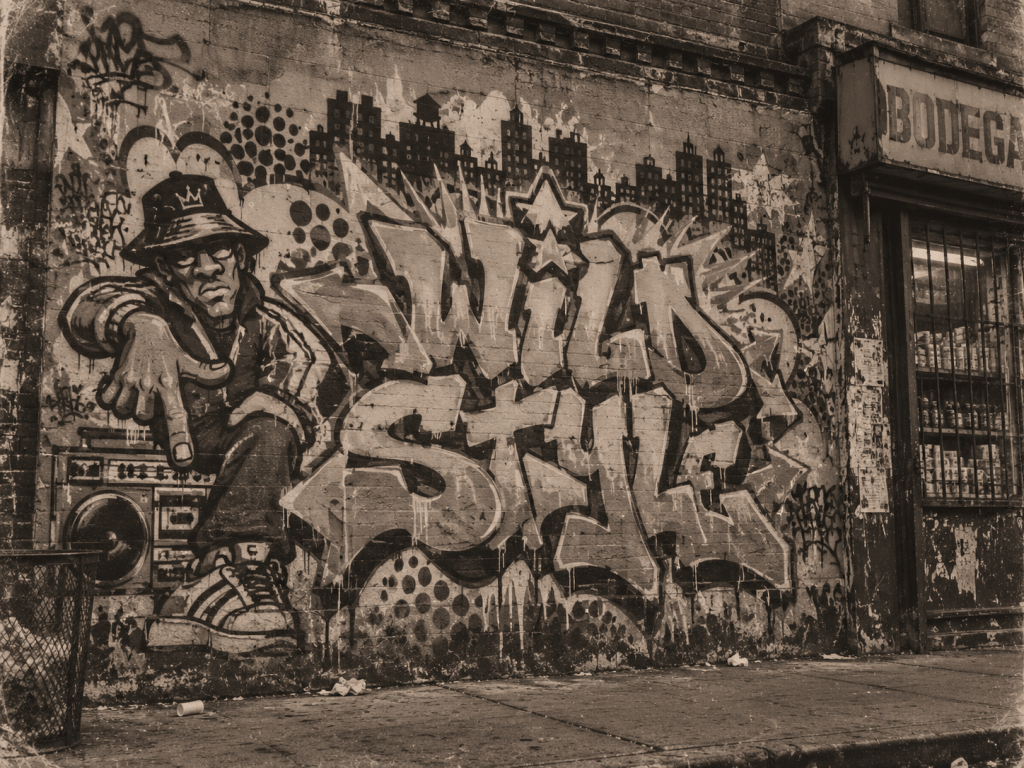
    They take us back roughly a decade, to the streets of New York City captured in Wild Style—Charlie Ahearn’s extraordinary 1983 film about the still-forming culture of hip-hop.

    We hear a group of guys arguing about a woman, graffiti writers and murals. One character finally delivers the punch line:

    “I’d paint three of those murals for some of that ass.”

    Then “Professor Booty” takes off.

    It is funny, crude and completely in character for the Beastie Boys. But the sample is more interesting than the joke.

    Because Wild Style was not merely some old movie the Beasties happened to sample. It was one of the foundational visual documents of New York hip-hop culture. The Museum of Modern Art calls it a “touchstone for hip-hop cinema,” noting that the film moves through hip hop’s artforms–graffiti writing, breaking, MCing and DJing–with actual pioneers of those scenes appearing on camera.

    So before the Beasties deliver a single rhyme on “Professor Booty,” they have already told you something about where they believe their music comes from.

    What Is Actually Happening in the Wild Style Scene?

    The sample comes from an early scene involving Raymond “Zoro,” played by legendary graffiti writer Lee Quiñones.

    Zoro is an underground writer—someone whose identity and reputation have been built largely through painting trains. His girlfriend Rose, played by Lady Pink, is also a graffiti artist, but she and her associates are moving in a somewhat different direction. They are painting murals and beginning to explore the possibility that graffiti might become legitimate work rather than something performed furtively on subway cars.

    That difference matters.

    Outside Connie’s Superette in the Bronx, Zoro encounters Chico. Their conversation becomes a mixture of graffiti gossip, sexual taunting and neighborhood trash talk. Chico needles Zoro about Rose associating with other graffiti writers and jokes about what he would be willing to paint to receive similar attention from her. The Beasties lift a portion of that conversation almost intact for the opening of “Professor Booty.”

    On the surface, it is simply guys talking trash. Within Wild Style, however, the scene also sits inside a much larger argument running through the movie: What happens when an underground culture starts becoming visible?

    Zoro represents one version of graffiti—the anonymous writer, the train yard, the illicit piece traveling through the city.

    Rose and the other writers are beginning to see murals, galleries and paying jobs as another possible path.

    The argument is not presented as an academic debate. It arrives as jealousy, jokes, competition and neighborhood conversation.

    That is one reason Wild Style feels so valuable today. Ideas that would eventually become major questions about hip-hop—authenticity, commercialization, ownership, legitimacy—appear while the culture is still figuring them out.

    So What Exactly Is a Mural?

    A mural, in the simplest sense, is artwork painted directly onto a large wall or architectural surface. But in the world depicted by Wild Style, the distinction between a mural and other forms of graffiti carried additional meaning.

    A graffiti writer might begin with a tag—a stylized signature or name. Writers developed more elaborate lettering, throw-ups and large “pieces,” particularly on subway cars. Reputation depended partly on style, originality, skill and how widely a writer’s name could be seen.

    A mural could take that same visual vocabulary—bright colors, outlines, exaggerated lettering, characters and enormous scale—and move it onto a wall where the work might be commissioned, permitted and expected to remain.

    That was a significant change. Instead of sneaking into a train yard, an artist might be standing on scaffolding painting in daylight. Instead of risking arrest to make a name visible throughout New York, an artist could theoretically be paid to transform a neighborhood wall.

    The Connie’s Superette scene was itself connected to precisely this environment: Ahearn later recalled that graffiti artist Crash had painted a mural for the store, helping inspire material used in the film.

    The mural therefore is not just scenery in Wild Style. It represents a crossroads.

    Graffiti Wasn’t Standing Beside Hip-Hop. It Was Part of Hip-Hop.

    This is an important point for people encountering early hip-hop history backwards through modern rap. Today, someone might think of graffiti artists, rappers, DJs and breakdancers as people participating in four separate artistic scenes. In early New York hip-hop culture, those worlds frequently overlapped.

    The Smithsonian identifies four traditional central elements of hip-hop: DJing, MCing, breaking and graffiti writing. That relationship was visible in the actual New York scene.

    The Museum of the City of New York describes the 1981 “Beyond Words” event at the Mudd Club, for example, as bringing graffiti art together with performances by Afrika Bambaataa, the Cold Crush Brothers and the Fantastic Five. Fab 5 Freddy was particularly important in connecting uptown graffiti and hip-hop culture with the downtown Manhattan art world.

    And Wild Style puts all of those people in essentially the same cinematic universe. There are graffiti writers Lee Quiñones and Lady Pink. There is the Rock Steady Crew. There is Grandmaster Flash. There are the Cold Crush Brothers. There is Fab 5 Freddy.

    These were not actors hired years later to recreate what early hip-hop looked like. They were participants.

    That is what gives Wild Style its strange power. It is a fictional movie that periodically starts feeling like documentary footage because so much of what appears on screen was actually happening around the filmmakers.

    Wild Style Could Only Have Come From New York

    That makes the Beasties’ choice particularly appropriate.Wild Style isn’t simply a movie about hip-hop. It is intensely about New York hip-hop.

    The movie was shot around the South Bronx, Lower East Side and subway system, using the physical city as part of the story. Its landscape is not a generic urban backdrop. Subway yards, neighborhood storefronts, vacant spaces, walls and parks are essential to the culture the film records.

    The New York of Wild Style also existed during a remarkably narrow historical window. Hip-hop was established enough to have developed its own stars, techniques, rivalries and aesthetic codes, but it had not yet become a global commercial industry.

    Graffiti writers were beginning to enter galleries. MCs were beginning to make records. Breakers were beginning to attract attention outside their neighborhoods.

    Downtown Manhattan was beginning to discover what had been happening uptown. The doors were opening. But the culture hadn’t completely walked through them yet.

    Wild Style caught that moment.

    And Then the Beastie Boys Sampled It

    Which makes the opening of “Professor Booty” feel different once you know what you’re hearing.

    The Beastie Boys weren’t simply sampling an amusing line from a movie.

    They were sampling a piece of hip-hop’s memory.

    And they were doing it on Check Your Head, an album that was itself fascinated with origins: old funk records, obscure breaks, live instruments, analog equipment, cheap microphones, punk, hardcore, dub, soul and the sounds that had shaped them before commercial expectations hardened around what a Beastie Boys record was supposed to be.

    That makes Wild Style almost perfectly suited to the album.

    Both works celebrate people figuring things out themselves.

    Build your own sound.

    Paint your own wall.

    Invent your own style.

    Find an abandoned or inexpensive space and turn it into something.

    Don’t wait for an established industry to tell you what the rules are.

    There is another wonderfully Beastie-like element to the choice, too. They do not begin “Professor Booty” with some grand historical pronouncement about hip-hop culture. They begin it with three guys talking filthy nonsense about graffiti murals.

    That is far more their style.

    The history lesson is hidden inside the joke.

    From a Bronx Wall to G-Son Studios

    There is something almost perfect about the journey of those few seconds of dialogue. A conversation filmed on a New York street in the early 1980s becomes part of a record made in Los Angeles roughly a decade later by three New Yorkers attempting to reinvent themselves.

    The Beastie Boys had traveled a long distance from the New York they grew up in. But at the beginning of “Professor Booty,” they open a tiny audio portal back to it.

    A graffiti writer.

    A neighborhood store.

    A mural.

    Some ridiculous trash talk.

    And behind all of it, the world in which hip-hop’s writers, DJs, MCs and b-boys were still close enough to one another that a movie could capture all four without needing to explain why they belonged together.

    For anyone who hears only a funny movie sample at the beginning of “Professor Booty,” it lasts a few seconds. For anyone who knows Wild Style, those few seconds contain an entire city.

    And a large part of the history that made the Beastie Boys possible.
  • There is a category of Beastie Boys song that probably deserves its own genre.

    There is a category of Beastie Boys song that probably deserves its own genre.

    Not rap.

    Not punk.

    Not rap rock.

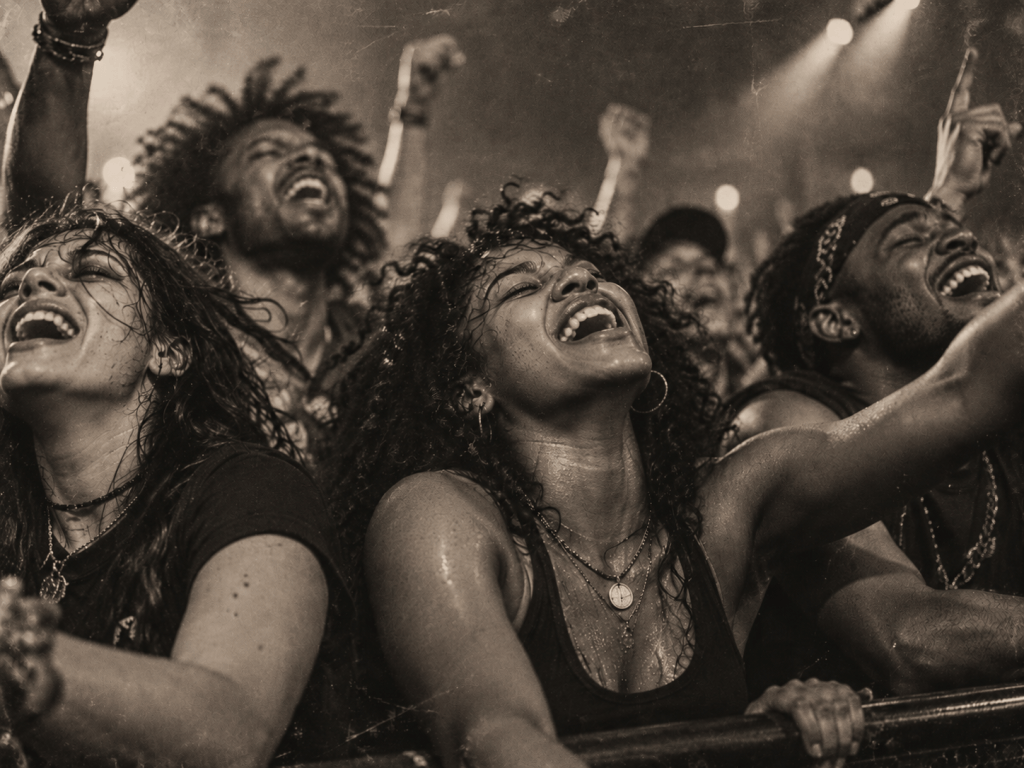
    The scream-along.

    These are the songs that make normal singing seem inadequate. You do not quietly mouth the words. You do not nod thoughtfully while appreciating the production. You wait for the right moment and then yell something at the stereo, preferably with several other people yelling it too.

    The Beastie Boys were unusually good at making these songs.

    Licensed to Yell

    It starts almost immediately on Licensed to Ill.

    “Fight for Your Right” may be the most obvious example. The entire song operates like a house party that has escaped adult supervision. Its chorus practically demands collective participation.

    Then there is “No Sleep Till Brooklyn.”

    Try saying “NO SLEEP TILL BROOKLYN!” at conversational volume.

    It feels wrong.

    The phrase only makes sense when shouted.

    “Rhymin’ & Stealin’” has the same quality, especially when the song drops into its huge pirate-metal attack. And “Time to Get Ill” turns its title phrase into another communal commandment.

    The Beasties understood something early: a great hook does not always need to be sung beautifully. Sometimes it needs to be yelled badly by twenty people at once.

    That instinct came partly from hip-hop and partly from punk.

    Punk taught them the value of the gang vocal. Hip-hop taught them the power of the call and response. The Beastie Boys figured out what happened when you smashed the two together.

    Paul’s Boutique: Slightly Smarter Screaming

    Paul’s Boutique was stranger, denser and more intricate, but the Beasties did not abandon the scream.

    They merely made it weirder.

    “A.W.O.L.!”

    That is not really a lyric. It is an announcement.

    “Shake Your Rump” has several moments built for group participation, the kind of lines where everyone in the car suddenly becomes the fourth Beastie Boy.

    And “Looking Down the Barrel of a Gun” takes things somewhere darker. The guitars get heavier. The voices get tougher. The song feels less like a party chant and more like controlled detonation.

    That matters because the Beasties were gradually discovering something.

    They could make music that had the physical force of punk without giving up hip-hop.

    Which brings us to Check Your Head.

    Then Came “So What’cha Want”

    “So What’cha Want” is the screamable song on Check Your Head.

    There are plenty of songs on the album you can rap along with. There are grooves you can nod to, instrumentals you can sink into, and hardcore songs you can thrash around to.

    But “So What’cha Want” is the one where the volume knob instinctively moves clockwise.

    The opening riff is already confrontational.

    Then the drums hit.

    Then those voices arrive sounding as though they have been transmitted through a blown speaker in an abandoned warehouse.

    And eventually comes the release:

    SO WHAT’CHA, WHAT’CHA, WHAT’CHA WANT?

    That is not a question requiring an answer.

    It is something you yell.

    The genius of the song is that the entire arrangement seems to be pushing toward those moments of release. The muddy distortion, the organ, the giant drums and the overlapping vocals create pressure. Then the refrain gives you somewhere to put it.

    Preferably through your lungs.

    Alone in the car? Scream it.

    At a party? Scream it.

    With three friends who all believe they are MCA? Definitely scream it.

    The Missing Link to “Sabotage”

    And this is where “So What’cha Want” becomes even more interesting.

    Because it feels like a direct ancestor of “Sabotage.”

    Not musically identical. But spiritually?

    Absolutely.

    “So What’cha Want” showed how effectively the Beastie Boys could combine hip-hop rhythm, live instrumentation, distortion and shouted vocals into something enormous.

    Two years later, they pushed that formula over a cliff.

    “Sabotage” may be the most screamable Beastie Boys song ever recorded.

    Possibly one of the most screamable songs recorded by anybody.

    There is no dignified way to perform it.

    You cannot politely sing:

    I CAN’T STAND IT!

    The song requires commitment.

    By the time Ad-Rock reaches that scream, he sounds less like a vocalist than a man discovering that his car has just been towed.

    That explosive quality did not suddenly appear on Ill Communication. You can hear the Beasties working toward it on Check Your Head.

    “So What’cha Want” is the bridge.

    The distortion gets thicker.

    The instruments get heavier.

    The vocals become more aggressive.

    The rap song begins mutating into something that could fill a rock arena.

    Then “Sabotage” finishes the transformation.

    The Beastie Boys Understood Group Psychology

    Part of the Beasties’ genius was understanding that music is social.

    People do not only want songs they can admire.

    They want songs they can participate in.

    Songs with lines everybody knows.

    Songs where the chorus arrives and the room suddenly joins the band.

    The Beasties had an extraordinary ability to create those moments.

    “Fight for Your Right.”

    “NO SLEEP TILL BROOKLYN!”

    “A.W.O.L.!”

    “SO WHAT’CHA WANT!”

    “I CAN’T STAND IT!”

    These are not merely memorable lyrics.

    They are cues.

    Everybody knows what to do when they arrive.

    Raise your voice.

    Lose whatever dignity you still possess.

    Join in.

    And maybe that is one small reason the Beastie Boys survived so many musical transformations. They could make incredibly sophisticated records while never forgetting one of music’s most primitive pleasures:

    Sometimes you just want to scream the chorus with your friends.

  • G-Son Studios: The Upstairs Clubhouse Where the Beastie Boys Reinvented Themselves – Part I

    G-Son Studios: The Upstairs Clubhouse Where the Beastie Boys Reinvented Themselves – Part I

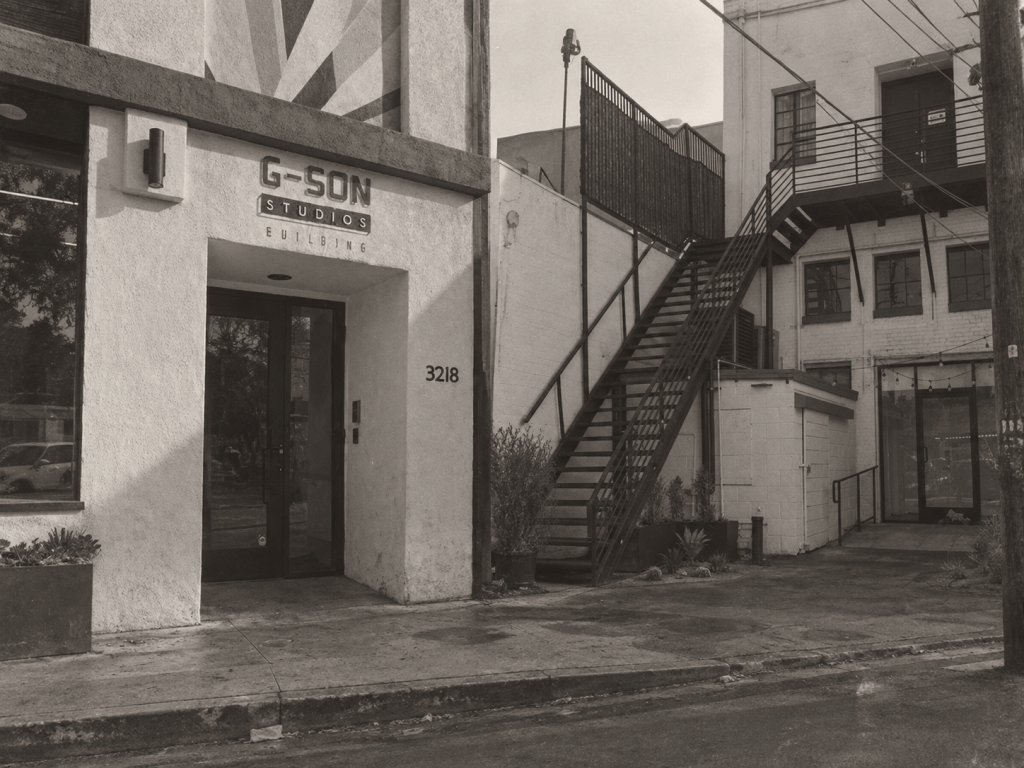
    A former community ballroom, a pharmacy downstairs, a broken plumbing-shop sign, a basketball hoop, and one of the least conventional places imaginable to make Check Your Head. If you were looking for the place where the Beastie Boys would reinvent themselves after Paul’s Boutique, you probably would not have chosen the second floor of an old commercial building in Atwater Village, Los Angeles.

    G-Son was not a famous recording studio and was not in the center of the Los Angeles music business. The space had once been a community-center ballroom. There was ordinary neighborhood retail below it. The Beasties could not even make much noise until the downstairs business closed. And when they moved in, it was not really a recording studio at all.

    Their keyboardist/carpenter Money Mark Nashita had to build part of it. That improvised space became G-Son Studios, the creative headquarters where the Beastie Boys made Check Your Head, continued into Ill Communication. They filmed portions of the “Pass the Mic” video, developed the Grand Royal record label and magazine, played basketball, skateboarded, listened to records, invited friends over and gradually figured out what the Beastie Boys were going to become in the 1990s.

    G-Son was unusual because it was not designed to make records. The Beasties made the building fit the way they wanted to record music.

    FINDING A HOMEBASE

    The path to G-Son began after Paul’s Boutique. The Dust Brothers-assisted album had involved extraordinarily elaborate sample construction and expensive professional studio work. Although the record would eventually become regarded as a masterpiece, commercially it initially fell far short of Licensed to Ill.

    For the next album, Mario Caldato Jr.—who had engineered on Paul’s Boutique and would become central to the band’s next phase—saw a practical problem. Studio time cost money. A lot of money. And the Beasties were no longer working quickly enough for the conventional rent-a-studio-by-the-hour model to make much sense.

    More importantly, they had started doing something that required time. They were playing instruments together again. Caldato has recalled that the process began informally in apartments and houses. The Beasties, Money Mark and Caldato would fool around with instruments, but neighbors eventually complained about the noise. They moved into rehearsal space and began recording ideas there.

    Then Caldato proposed a more radical solution: Instead of continuing to pay somebody else for studio time, why not rent a cheap space and build their own? For the Check Your Head sessions, he remembered the Beasties renting an empty space and installing the equipment they needed: microphones and outboard gear that Caldato already had, plus a Neotek Élan console and a Tascam two-inch tape machine purchased for the studio. 

    The proposal changed much more than the band’s studio bill. It changed the way they could work.

    GLENDALE BOULEVARD IN ATWATER VILLAGE

    G-Son was established in an upstairs space at the corner of Glendale Boulevard and Larga Avenue in Atwater Village, northeast of downtown Los Angeles.

    The present G-Son operation gives its address as:

    3218½ Glendale Boulevard
    Los Angeles, California 90039

    Historical accounts sometimes use 3218 Glendale Boulevard or 3222 Glendale Boulevard. That apparent inconsistency largely reflects the multiple storefronts and units associated with the same commercial complex rather than three completely different G-Sons. The present venue identifies itself as 3218½ Glendale. 

    The neighborhood itself mattered. Atwater Village in 1990–91 was nothing like the fashionable version of Atwater that developed later. Glendale Boulevard was an older neighborhood commercial strip populated by pharmacies, restaurants, bakeries, repair and specialty businesses, and modest storefronts. It was away from the obvious centers of the record industry. That was part of its usefulness.

    The Beasties did not need a glamorous studio address. They needed somewhere they could disappear and reinvent themselves.

    BALLROOM BLITZ

    The building’s upstairs room had a completely different life before the Beasties arrived. The current G-Son history identifies it as the former Atwater Community Center ballroom—a large gathering room rather than a purpose-built recording facility. That helps explain the peculiar physical character of the place.

    The space contained a substantial open room, which was perfect for the Beasties’ purposes once they began using it not only for recording but for rehearsing, jamming and hanging around. It was not acoustically conceived by a studio architect; the room was intend for community.

    That distinction became part of G-Son’s identity. Instead of squeezing themselves into the workflow of a professional studio, the Beasties could turn the ballroom into something closer to a clubhouse with recording equipment. And that is what they did.

    MONEY MARK AIN’T HAVIN’ IT

    One of the best details in the G-Son story comes directly from Money Mark. Mark was not yet simply “the Beastie Boys’ keyboard player.” He was working as a carpenter.

    His introduction into the Beasties’ circle had itself involved carpentry: Mario Caldato has told the story of Mike D damaging the gate at the group’s earlier G-Spot house and Caldato bringing Mark in to repair it. Music entered the conversation, Mark started playing with the group, and eventually his keyboards became fundamental to their new sound. 

    When they found the room that became G-Son, those construction skills suddenly became very useful. In a 1998 SPIN oral history, Money Mark remembered that the Beasties were already trying to work on the record, so he hurried the construction of the control room. His wonderfully revealing description was:

    “We were building and recording at the same time.”

    That may be the perfect sentence for Check Your Head.  The record and the studio were essentially developing together. There was no pristine facility waiting for them. They created the workspace as they discovered what kind of music they wanted to make inside it.

    [end of Part I]